How Google handles JavaScript throughout the indexing process
“It has become appallingly obvious that our technology has exceeded our humanity“”
Hey,
Welcome to issue #384 of FSB! I am about to go on holiday for a full week so really looking forward to taking a little break in this hectic period! But don't worry, I still have managed to compile another issue full of amazing full-stack content for your enjoyment!
Over the years, Google's treatment of JavaScript has changed, leaving us with misconceptions about how web pages are indexed. In this article, Vercel deep dives into the latest news about JavaScript and Google indexing of web pages providing you with everything you need to know do create SEO-friendly websites in 2024..
The W3C Technical Architecture Group explains how third-party cookies reduce users’ privacy and why they must be removed from the web. This blog post introduces the latest TAG finding, Third-party cookies must be removed.
The US government plans to convert all C code to Rust. The Defense Advanced Research Projects Agency, better known as DARPA, just launched a project called TRACTOR with the ambitious goal of automating the conversion of C code to Rust while retaining a level of code quality that they define as "the same quality and style that a skilled Rust developer would produce".
This blog post by Cloudflare explores the impact of the Paris 2024 Summer Olympics on Internet traffic in France and beyond, concentrating on web activity during the opening ceremony and the initial days of competition. Let the games continue.
Node.js has (finally) added experimental support for TypeScript, a move that highlights the growing importance of TypeScript in modern development. But this version of TypeScript running in Node.js is not a fully-fledged and type-checked TypeScript compiler. It is a way to strip out all the type annotations to convert TypeScript files into equivalent JavaScriopt that can executed in Node.js. It's exciting but worth knowing the limitations of this approach!
In this article, three amazing engineers at Shopify discovered that JavaScript garbage collection didn't work as they originally thought when working with closures. They go through various code snippets to show us which cases can be unexpectedly problematic and might cause a memory leak.
JavaScript Frameworks generally do a lot of DOM handling for you, but doing it yourself can be the most performant option, and there are quite a few best practices to squeeze even more performance from our beloved browsers.
Book of the week
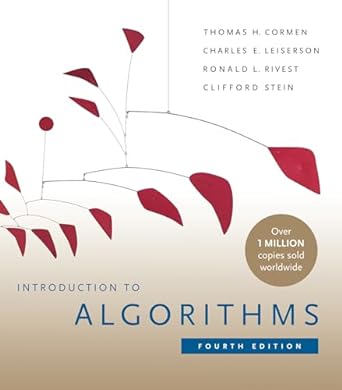
Introduction to Algorithms, fourth edition
by Thomas H. Cormen, Charles E. Leiserson, Ronald L. Rivest, and Clifford Stein
A comprehensive update of the leading algorithms text, with new material on matchings in bipartite graphs, online algorithms, machine learning, and other topics.Some books on algorithms are rigorous but incomplete; others cover masses of material but lack rigor. Introduction to Algorithms uniquely combines rigor and comprehensiveness. It covers a broad range of algorithms in depth, yet makes their design and analysis accessible to all levels of readers, with self-contained chapters and algorithms in pseudocode. Since the publication of the first edition, Introduction to Algorithms has become the leading algorithms text in universities worldwide as well as the standard reference for professionals. This fourth edition has been updated throughout.